
Introduction
In today?s business world, power interruptions can cause significant disruptions, resulting in lost productivity and potential damage to equipment. Whether you’re running servers, network equipment, or even a small office, reliable power protection is crucial.
The APC Line-Interactive UPS (Uninterruptible Power Supply) offers a practical, cost-effective solution for businesses of all sizes. Unlike basic surge protectors, it provides both surge protection and battery backup, ensuring your equipment stays operational during power outages and voltage fluctuations.
This blog explains why an APC Line-Interactive UPS can be a game changer for your business, offering a reliable, affordable solution to prevent downtime and protect your valuable IT assets.
What is an APC Line-Interactive UPS?
An APC Line-Interactive UPS is a power protection system that not only provides backup power during outages but also offers voltage regulation for minor power fluctuations. It works by automatically adjusting for slight variations in incoming power, saving your equipment from potential damage without immediately relying on the battery.
Key features include:
-
Automatic Voltage Regulation (AVR): Keeps the voltage stable, preventing equipment damage from voltage dips or surges.
-
Pure Sine-Wave Output: Provides clean, stable power to sensitive equipment, such as servers and networking devices.
-
SmartConnect: Enables cloud-based monitoring, providing real-time alerts and system status remotely.
Key Benefits of APC Line-Interactive UPS for Your Business
-
Reliable Power Protection
APC Line-Interactive UPS systems protect against power disruptions, such as blackouts, brownouts, and voltage spikes, ensuring your business stays operational. -
Cost-Effective Solution
APC?s UPS systems offer excellent protection at a lower cost compared to more complex online UPS systems, making them ideal for small and medium-sized businesses. -
Energy Efficiency
Designed to optimize energy use, these UPS systems provide the necessary power with minimal waste, helping reduce your business?s energy consumption and cost. -
Remote Monitoring
With SmartConnect, you can monitor your UPS remotely, receive alerts, and track system health without needing physical access to the device. -
Scalability
APC?s UPS systems are scalable, meaning you can easily add additional units as your business grows, ensuring long-term protection without major upgrades.
APC Line-Interactive UPS: Ideal for Small to Medium-Sized Businesses
The APC Line-Interactive UPS is a perfect fit for businesses that:
-
Require reliable protection for IT equipment such as servers, routers, and POS systems.
-
Need an affordable yet dependable solution for power backup.
-
Operate in areas with moderate power quality issues, such as occasional surges and sags.
-
Seek easy-to-manage, remote-monitoring features without extensive infrastructure needs.
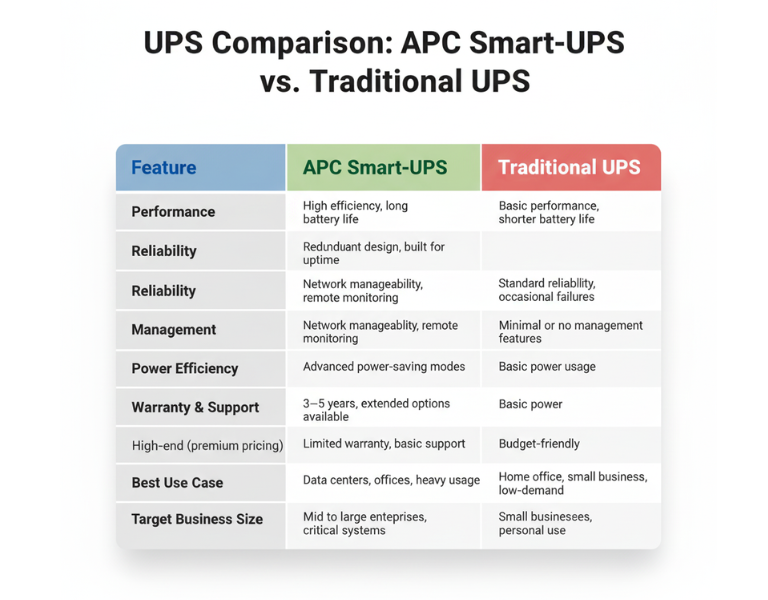
Comparison Table: APC Line-Interactive UPS Models
| Feature | APC Smart-UPS 1000VA | APC Smart-UPS 1500VA | APC Smart-UPS 2200VA |
|---|---|---|---|
| Performance | 1000VA / 600W | 1500VA / 900W | 2200VA / 1320W |
| Voltage Regulation | Automatic Voltage Regulation (AVR) | AVR | AVR |
| Power Efficiency | High | High | High |
| Pure Sine-Wave Output | Yes | Yes | Yes |
| Warranty & Support | 3 years | 3 years | 3 years |
| Remote Monitoring | SmartConnect | SmartConnect | SmartConnect |
| Price Range | $450?$550 | $650?$750 | $1,100?$1,300 |
| Best Use Case | Small office or home office | Small to medium-sized business | Medium-sized business or rack setups |
| Target Business Size | Up to 15 users | 15?30 users | 30+ users |
Pros and Cons of APC Line-Interactive UPS
APC Smart-UPS 1000VA
Pros:
-
Cost-effective for small office use.
-
Provides essential surge protection and backup power.
-
Pure sine-wave output for sensitive devices.
Cons:
-
Limited to smaller setups (under 15 users).
-
Shorter runtime under full load compared to higher-capacity models.
APC Smart-UPS 1500VA
Pros:
-
Ideal for medium-sized businesses or server rooms.
-
Good power capacity and longer battery runtime.
-
Reliable AVR for consistent voltage regulation.
Cons:
-
Higher initial cost than the 1000VA model.
-
Slightly bulkier than smaller models.
APC Smart-UPS 2200VA
Pros:
-
Excellent for businesses with heavier IT equipment.
-
Longer runtime under load, suitable for multiple servers.
-
Strong reliability with high-capacity power.
Cons:
-
Larger footprint and higher price point.
-
May be overkill for small offices or light loads.
Expert Recommendation: Is APC Line-Interactive UPS Right for Your Business?
For small to medium-sized businesses, the APC Smart-UPS 1500VA provides the best balance of cost, capacity, and features. It offers strong protection for servers and network devices, making it ideal for businesses looking for affordable yet reliable power backup.
If you?re operating a small office with minimal IT infrastructure, the 1000VA model may be sufficient. However, for larger operations with multiple devices, the 2200VA model will provide ample capacity and ensure the longevity of your equipment, particularly if you?re dealing with more sensitive or high-demand setups.
Real-World Use Cases for APC Line-Interactive UPS
-
Small Design Studio (10-15 users)
A design studio with a few high-powered workstations benefits from the APC Smart-UPS 1000VA, providing surge protection and backup power during outages to prevent data loss and keep the creative process uninterrupted. -
Growing Office with Multiple Servers (20-30 users)
A marketing company with multiple servers, network switches, and workstations would rely on the APC Smart-UPS 1500VA, offering robust backup power, energy efficiency, and seamless monitoring through SmartConnect. -
Larger Office Setup (30+ users, multiple racks)
A tech company with a small data center would use the APC Smart-UPS 2200VA, ensuring that multiple servers, routers, and storage systems remain operational during power disruptions, with enough capacity to handle the growing IT demands.
Conclusion: Keep Your Business Running with APC Line-Interactive UPS
APC Line-Interactive UPS systems provide small and medium-sized businesses with affordable, reliable, and efficient power protection. With features like AVR, remote monitoring, and pure sine-wave output, APC ensures that your business operations remain uninterrupted, even during power fluctuations. Whether you?re a growing office or managing a network of critical devices, APC?s Line-Interactive UPS models offer a smart investment in power security.
 ÿ ÿ
ÿ ÿ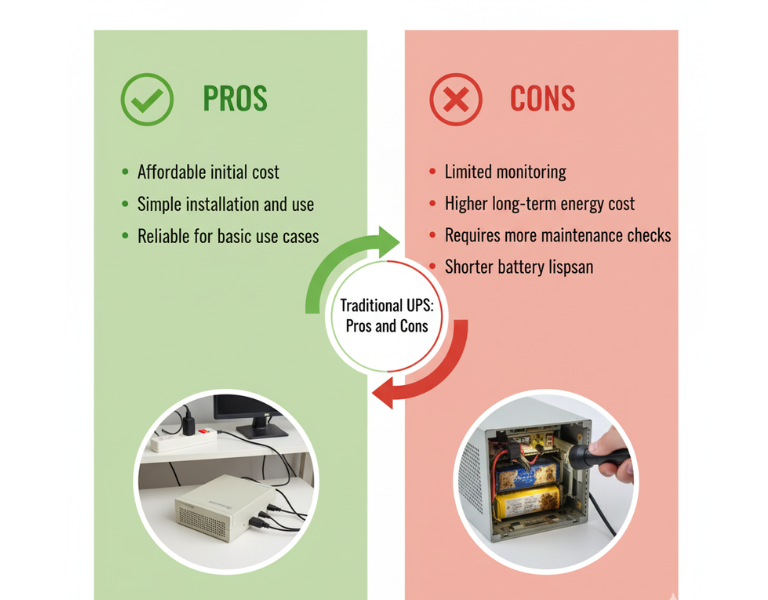 ÿ ÿ ÿ
ÿ ÿ ÿ